 616.396.0172
  sales@requesthvac.com
  Scheude An Appointment
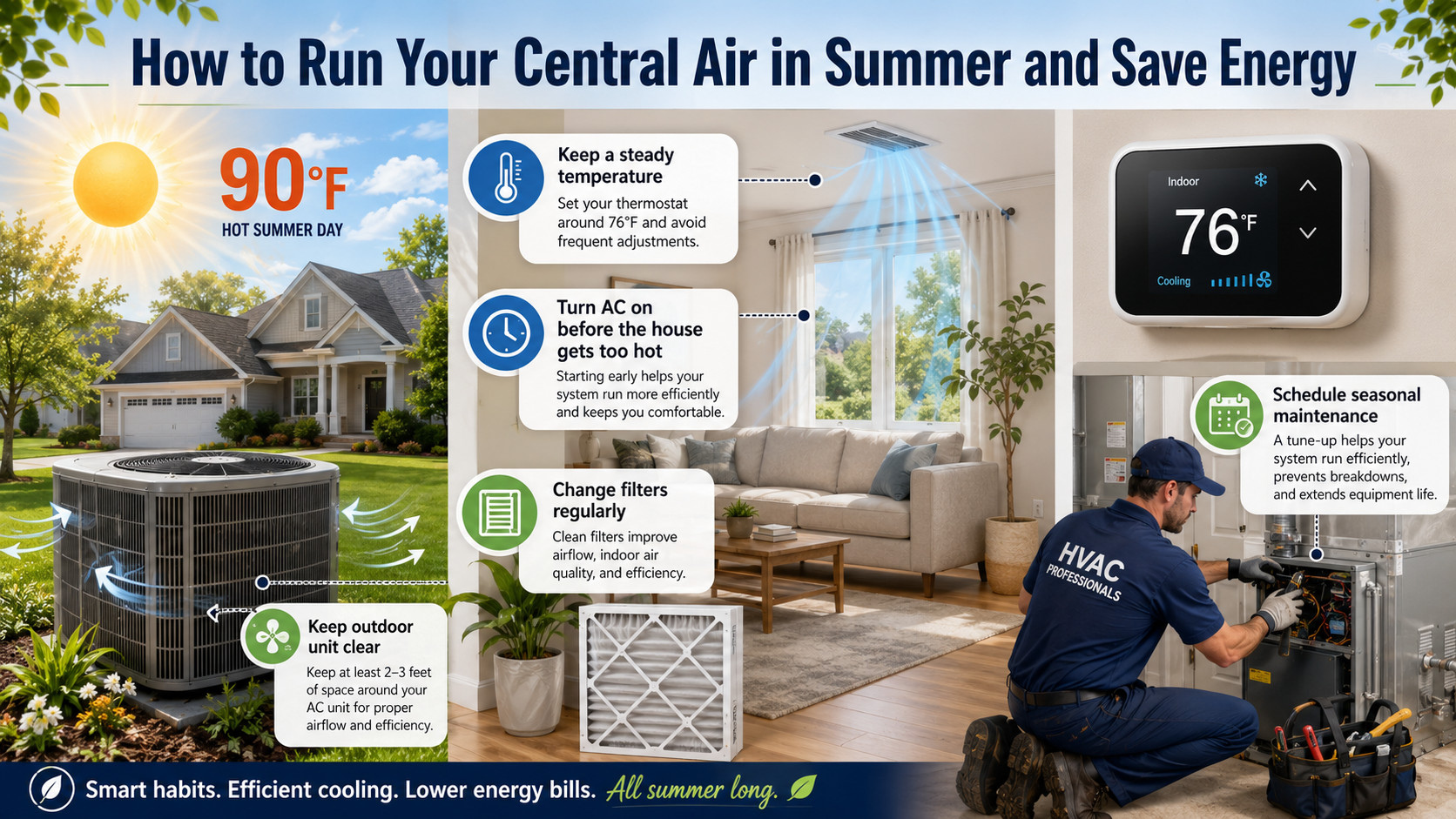
When the summer heat settles in, one of the biggest questions homeowners have is: “What is the best way to run my central air system without running up my electric bill?”
A lot of people believe they are saving money by leaving the air conditioner off until the house becomes hot, then turning it on when they cannot take the heat anymore. The problem is, that often makes the system work harder, longer, and less efficiently. By the time the home is already hot, the walls, floors, furniture, attic space, and ductwork have all absorbed heat. Now your air conditioner has to remove all of that built-up heat before the home starts to feel comfortable again.
The better approach is to manage the temperature before the house gets overheated.
The Best Way to Run Your Central Air
During the summer months, your air conditioner works best when it is allowed to maintain a steady temperature instead of constantly trying to recover from a hot house.
That does not mean you need to keep the thermostat extremely low all day. It means you should choose a reasonable temperature and let the system maintain it. For many homes, a comfortable and energy-conscious setting is somewhere around 75 to 78 degrees during the day. Some people prefer it cooler, but every degree lower can increase run time and energy use.
If you are leaving for work or will be gone for several hours, raise the thermostat a few degrees instead of turning the system completely off. For example, if you normally keep the house at 75 degrees, you might raise it to 78 or 80 while you are away. That reduces run time without letting the home become extremely hot.
When you return, the system will not have to fight as hard to bring the temperature back down.
When Should You Turn the AC On?
One of the biggest mistakes homeowners make is waiting too long to turn the air conditioning on.
If the forecast shows a hot day coming, especially with high humidity, it is better to turn the system on earlier in the day before the home has already heated up. Morning is usually the best time to get ahead of the heat. Once the attic, walls, windows, and furniture absorb heat, your system has to work much harder to catch up.
This is especially important during heat waves. On extremely hot days, your air conditioner may run longer than normal. That does not always mean something is wrong. It may simply mean the system is doing its job under heavy outdoor conditions.
The goal is to keep the house from gaining too much heat in the first place.
Do Not Keep Turning the Thermostat Way Down
Another common mistake is turning the thermostat way down, thinking the air conditioner will cool the home faster.
For example, if the house is 80 degrees and you want it to be 74, setting the thermostat to 65 will not usually make the system cool faster. Most central air systems cool at one speed unless you have a staged or variable-speed system. Lowering the thermostat too far simply tells the system to keep running longer.
This can waste energy, increase wear on the equipment, and possibly cause comfort issues if the system runs excessively.
Set the thermostat to the temperature you actually want, then give the system time to do its job.
Understanding Temperature Spread
There is also a lot of confusion about what an air conditioner can actually do when it is very hot outside.
Some people believe that if it is 90 degrees outside, the house should still easily stay at 70 degrees inside. In some well-insulated homes with properly sized equipment, that may happen. But in many homes, especially older homes, homes with poor insulation, leaky ductwork, dirty filters, older equipment, or large sun-facing windows, the system may struggle to hold that low of a temperature during extreme heat.
A very important thing to understand is that the common “15 to 20 degree temperature split” does not mean your house will always be 15 to 20 degrees cooler than the outdoor temperature.
That temperature split usually refers to the difference between the warm return air going into the system and the cooled supply air coming out of the vents. For example, if the return air going into the system is 75 degrees and the supply air coming out is around 55 to 60 degrees, that may show the system is cooling properly.
But that does not mean the home will always stay 70 degrees when it is 90, 95, or 100 degrees outside. The indoor temperature depends on many things, including insulation, windows, ductwork, equipment size, airflow, humidity, sun exposure, and how well the home is sealed.
If your system is running nonstop on a very hot day and the indoor temperature is slowly rising, it may not always mean the air conditioner is broken. It may mean the system is at its limit for the conditions. However, if the air coming from the vents is not cool, the system is short cycling, the coil is freezing, the outdoor unit is not running, or the filter is dirty, then it is time to have it checked.
Change Your Filter Regularly
One of the simplest and most important things you can do is keep your air filter clean.
A dirty filter restricts airflow. When airflow is restricted, the system has to work harder to move air through the home. This can increase your electric bill, reduce comfort, and put extra strain on the blower motor, evaporator coil, compressor, and other parts of the system.
A dirty filter can also lead to frozen coils. When not enough warm air moves across the indoor coil, the coil can get too cold and start to ice up. Once that happens, the system may stop cooling properly altogether.
During heavy-use months, check your filter monthly. Some filters may last longer, but if it looks dirty, change it. Homes with pets, dust, construction work, smokers, or heavy system use may need filter changes more often.
A clean filter helps your system breathe.
Keep the Outdoor Unit Clear
Your outdoor condenser also needs room to breathe.
Grass clippings, leaves, cottonwood, dirt, and weeds can block airflow through the outdoor coil. When the outdoor unit cannot release heat properly, your system loses efficiency and may run hotter than it should.
Keep bushes, weeds, and debris away from the outdoor unit. Do not stack items around it, do not cover it while it is running, and avoid blowing lawn clippings directly into the coil.
The outdoor unit’s job is to remove heat from your home and release it outside. If it cannot breathe, your home will not cool as well.
Use Blinds, Curtains, and Fans Wisely
Your air conditioner is only one part of keeping your home comfortable.
On hot sunny days, close blinds or curtains on windows that get direct sunlight. This can reduce the heat entering the home and help the system keep up. Ceiling fans can also help you feel cooler, but remember that fans cool people, not rooms. Turn fans off when you leave the room to avoid wasting electricity.
Also avoid using ovens, dryers, or other heat-producing appliances during the hottest part of the day when possible. These appliances add heat to the home and make the air conditioner work harder.
Schedule Maintenance Before the Heat Hits
The best time to have your air conditioning system checked is before the hottest part of the season.
A professional HVAC technician can check refrigerant levels, inspect electrical components, clean coils, check airflow, inspect the condensate drain, test the capacitor, check the blower, and make sure the system is operating safely and efficiently.
Waiting until the first major heat wave can be risky. That is when HVAC companies are the busiest, and it is also when weak parts are more likely to fail. Preventive maintenance gives you a better chance of catching small problems before they turn into expensive breakdowns.
It is always better to find a weak capacitor, dirty coil, clogged drain, or airflow issue before the system quits on a 90-degree day.
Summer AC Do’s and Don’ts
Do keep your thermostat at a steady, reasonable temperature.
Do turn the system on before the house gets extremely hot.
Do raise the thermostat a few degrees when you are away instead of shutting the system completely off.
Do check and change your filter regularly.
Do keep the outdoor unit clean and clear.
Do close blinds and curtains during the hottest part of the day.
Do schedule professional maintenance before peak summer heat.
Do not set the thermostat extremely low expecting the system to cool faster.
Do not keep turning the system on and off throughout the day.
Do not ignore weak airflow, warm air from the vents, ice on the lines, unusual noises, or water around the furnace or air handler.
Do not block supply or return vents with furniture, rugs, or curtains.
Do not wait until the hottest day of the year to find out your system needs service.
Final Thought
Your central air system is designed to maintain comfort, not perform miracles after the home has already become overheated.
The best way to save energy is to stay ahead of the heat, keep the system clean, maintain good airflow, use a reasonable thermostat setting, and have the equipment checked before extreme weather arrives.
A properly maintained air conditioner will run more efficiently, cool better, last longer, and help keep your summer electric bills under better control.